
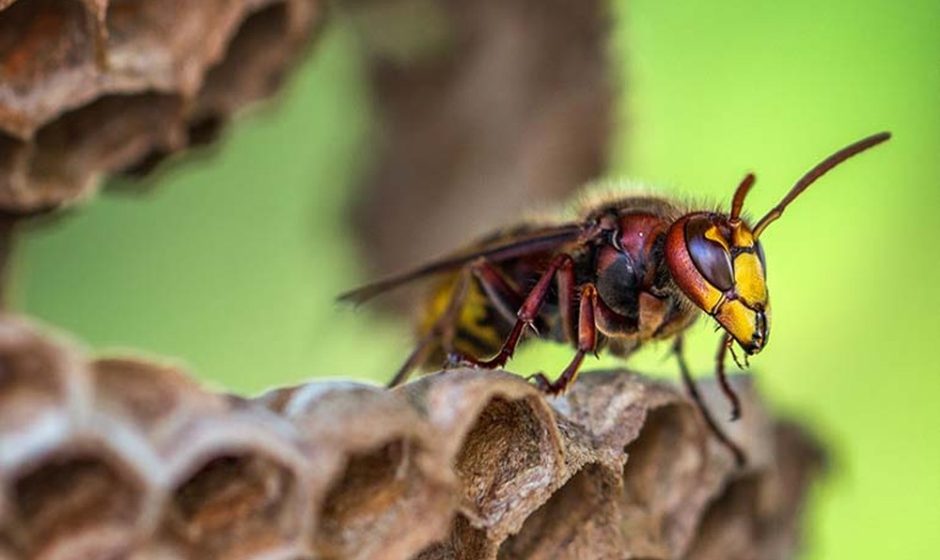

A paper wasp under an eave in June is the result of a decision made in April by a single fertilized queen. By the time the homeowner notices activity, the colony has already been built, the first generation of workers is flying, and the treatment decision has become a removal decision. The overwintered queen that founded the colony, meanwhile, spent the previous autumn and winter hidden in an attic, wall void, or piece of siding somewhere on the property. Most Kansas City homeowners have never thought about the biology this implies, and most pest control companies do not market the preventive service that addresses it. Kansas City pest control providers with a structural inspection orientation, including ZipZap Termite & Pest Control in Lawson, can identify the overwintering sites and act on them during a short window each spring, which is substantially cheaper and safer than dealing with a mature colony later in the season.
The Biology Most Homeowners Do Not Know
Social wasps in Missouri, including paper wasps (Polistes species), yellowjackets (Vespula species), and bald-faced hornets (Dolichovespula maculata), follow an annual colony cycle that is entirely different from what most people assume.
The colony lasts one year. Workers are produced through summer, reproductives (new queens and males) are produced in late summer and early fall, mating occurs, and then the entire colony, including the founding queen and all workers, dies at the first hard frost. The only members of the species that survive the winter are the newly fertilized queens, which have spent the late summer feeding heavily to build up fat reserves before finding a sheltered overwintering location.
These queens shelter individually, not in groups. They enter diapause, a hibernation-like state, and remain motionless through the coldest months. When spring temperatures stabilize above about 50 degrees Fahrenheit, typically in early to mid-April in the Kansas City metro, they emerge, find a suitable nest site, and begin building the new colony alone. A single queen produces the first handful of workers, after which the colony grows exponentially through summer.
A yellowjacket colony in Missouri can reach several thousand workers by August, all derived from a single queen that found a shelter spot the previous October.
Where Queens Actually Overwinter
Overwintering queens have specific shelter requirements: dry, protected from freezing temperatures, stable enough to hold position for months, and accessible from the outside during fall dispersal. Several location types on a typical Kansas City home fit the profile.
Attic spaces, particularly near the eaves where air movement is limited and temperatures stay cold but stable. Queens wedge into insulation, tuck behind soffit boxing, or shelter in the junctions between rafters and exterior walls.
Wall voids accessed through gaps in siding, damaged flashing, or utility penetrations. Voids behind siding are ideal because they combine thermal protection with outside access.
Behind shutters, particularly decorative shutters that are not actually functional. The narrow space between the shutter and the siding is warm enough to prevent freezing and protected from weather.
Under deck boards, porch ceilings, and soffit returns. Any sheltered overhang that does not see direct weather provides a potential site.
Inside outbuildings, sheds, detached garages, and seasonal storage structures. These are common sites because the interior temperatures stay above freezing in a typical Missouri winter and interior surfaces are less disturbed than in a main residence.
Occasionally in stored items: rolled tarps, stacked patio cushions, folded umbrellas, and similar objects that are left outside or in a garage through the winter.
Why Spring Inspection Is the High-Leverage Intervention
The math of overwintering queen suppression is unusual because of the colony-founding biology.
A single queen killed or excluded in April prevents one entire colony. In the case of yellowjackets and hornets, that one prevention is the equivalent of eliminating several thousand workers that would otherwise have emerged by August. For paper wasps, the numbers are smaller (15 to 30 workers per colony is typical) but the aggregate across multiple queens on a property is substantial.
The timing window is short. Queens are detectable during late fall as they seek shelter and again during early spring as they emerge, with the April window being the easier of the two because the queens are active and visible as they leave their overwintering sites. Inspections conducted between late March and mid-April (matching the Kansas City frost pattern) produce the highest detection rates.
Treatment at this stage is also substantially safer than treatment of established colonies. A queen alone cannot defend a colony, does not have worker support, and is typically removed or treated without the risk that a mature yellowjacket nest poses. Late-season treatment of a 2,000-worker colony under an eave involves significant protective equipment, often evening application to reduce defense, and a real risk of stings. Spring queen removal is routine exterior pest work.
What a Thorough Spring Wasp Inspection Actually Looks Like
The inspection covers the locations most likely to harbor queens and the exterior surfaces where queens are most likely to be emerging or searching for nesting sites.
Attic access during a cool morning, when queens remain sluggish, allows visual inspection of rafter junctions, soffit box interiors, and insulation near eaves. Queens found during this check can be removed individually.
Exterior inspection of siding, with particular attention to gaps around windows, damaged flashing, and accumulated debris behind downspouts and utility boxes. Evidence of prior year’s nesting activity (old paper wasp nests, mud dauber tubes, stains from yellowjacket traffic) identifies preferred nest sites that the emerging queens are likely to target.
Inspection of shutters, deck undersides, porch ceilings, and any sheltered overhang. Queens that settled in these sites through the winter often emerge sluggishly on the first warm days.
Preventive residual application to the preferred nesting surfaces, typically a pyrethroid or pyrethroid-equivalent product applied to the undersides of eaves, inside shutter cavities, and on siding areas with prior nest activity. Emerging queens contact the treated surface and are killed before they establish a new colony.
The exterior treatment window closes quickly. By mid-May, most of the queens that will found colonies that year have already committed to nest sites, and the preventive value of the treatment drops significantly.
When This Service Is Worth Scheduling
Properties with a history of summer stinging insect activity are the strongest candidates. Any home that has dealt with multiple paper wasp nests, a yellowjacket colony near the foundation, or bald-faced hornet activity on the exterior in the previous year almost certainly has overwintering queens returning to the same structural features.
Households with members allergic to stings benefit significantly from the preventive approach, which reduces the likelihood of any stinging event later in the year. Properties with outdoor features that see regular use (pools, patios, play structures, gardens) also benefit disproportionately because the cost of a colony established in a high-contact area is higher than in an unused yard corner.
A Kansas City pest control provider that includes spring wasp inspection in its service menu can complete the work in a single visit, typically in the same service call as a general pest inspection or termite check.
The Short Version
A single fertilized queen in April becomes a thousands-worker colony by August, and the structural features she used to overwinter are the ones she will return to if left undisturbed. Spring inspection during the brief April window, addressed by a Kansas City pest control provider such as ZipZap Termite & Pest Control, prevents colonies before they are founded and eliminates most of the summer stinging insect activity that later-season treatment can only react to.