
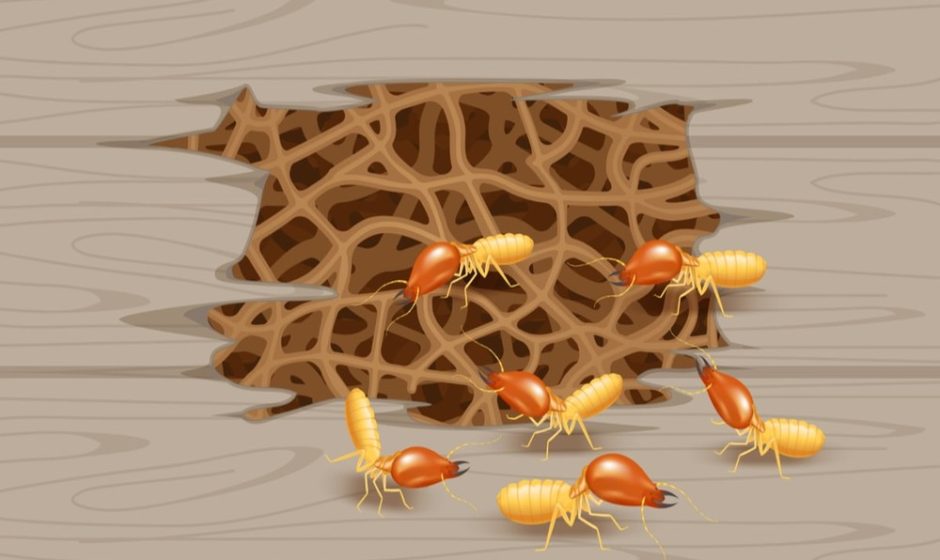

Subterranean termites are responsible for more structural damage to homes across the United States than any other pest. They do most of their work out of sight. Soil conditions and moisture levels in Glen Ellyn, IL can create favorable environments for termite activity, so homeowners are at risk.
A subterranean termite colony can work through the wood in your home’s structure for months or years without showing visible signs. This makes it essential to know what to look for when dealing with these termites. This way, you can contact Pointe Pest Control in Glen Ellyn, IL for help in eliminating active termites and preventing future invasions. Here’s how to know if your Glen Ellyn, IL home has a subterranean termite colony.
There are Mud Tubes on Your Foundation or Walls
Subterranean termites live in the soil and must maintain moisture as they travel. They construct pencil-width tubes made from soil, wood particles, and saliva that connect their underground colony to the wood they feed on above ground. These tubes most commonly appear on exterior and interior foundation walls and crawl space piers and beams. They can also be found in basement walls and floor joists and around utility penetrations.
A broken tube that gets rebuilt within a few days confirms an active colony. A tube that stays broken may indicate the termites have moved to a different area.
Wood That Sounds Hollow When Tapped
Subterranean termites consume wood from the inside out, which means the surface can look normal while the interior has been hollowed. Thus, visual inspection alone may not be enough.
Walk through your home and tap on wood surfaces, such as baseboards, door frames, window sills, exposed beams, and wood paneling. Solid wood produces a dense, firm sound. Wood that termites have compromised produces a dull, hollow sound. Pay particular attention to:
Wood near the foundation or in contact with soil.
Areas around windows and doors where moisture tends to collect.
Wood in basements and crawl spaces.
Structural beams in the garage or attic.
Termite Swarmers or Discarded Wings
Mature subterranean termite colonies send out swarmers in spring. These winged reproductive termites establish new colonies. A termite swarm near or inside your home is one of the clearest possible indicators of an established colony nearby. Swarmers are often mistaken for flying ants. That is why you should be aware of the differences:
Termites have straight antennae; ants have elbowed antennae.
Termites have two pairs of equal-length wings; ants have unequal wings.
Termites have a broad waist; ants have a narrow, pinched waist.
Discarded wings near windowsills, door frames, or light fixtures are a telltale sign of activity, even if you miss the swarm itself. Swarmers shed their wings shortly after landing, and these piles of wings can be the first clue that homeowners look for.
Doors and Windows That Suddenly Stick
Termites that damage wood framing around doors and windows can lead to warping or shifting frames. This results in doors and windows that suddenly become difficult to open or close, even when there’s no obvious moisture issue or home settling to explain it.
This sign is easy to dismiss as a routine home maintenance issue, which is why it gets overlooked. Termites might be to blame if multiple doors or windows in your home develop this problem around the same time.
Frass or Soil Near Wood Surfaces
Subterranean termites can leave behind soil deposits and debris near the wood they consume. Small piles of what looks like dirt or sawdust near baseboards, wood trim, or structural wood in your crawl space can indicate termite activity.
These deposits are easy to mistake for general household dust or construction debris. The main distinction is location. You might want to take a close look at the material that appears near wood surfaces or along baseboards without an obvious source.