
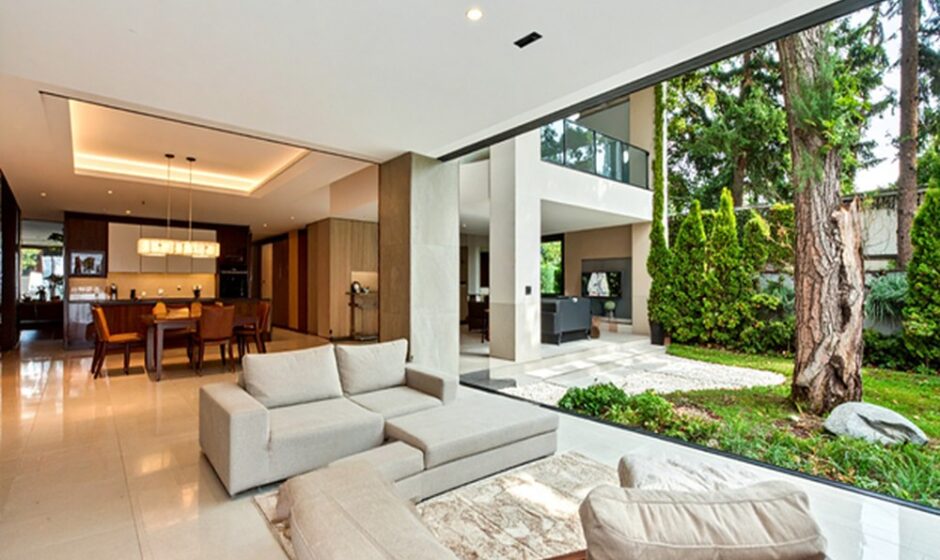

Southern California modernism has always been defined by its relationship to the environment. The region’s architectural legacy is not rooted in dense, heavy masonry, but rather in a profound openness-an deliberate blurring of the boundaries between domestic interiors and the expansive Pacific horizon. Driven by the distinct coastal topography, fluctuating microclimates, and intense sunlight, luxury home design relies on a highly curated, honest material palette.
In elite residential enclaves from the canyons of Bel-Air to the cliffs of Malibu, luxury is no longer articulated through applied ornamentation or stark, clinical minimalism. Instead, contemporary master builders and architects rely on tactile, performance-driven materials that capture light, withstand the elements, and ground structures organically into the landscape. Here are five foundational materials defining high-end Southern California architecture.
1. Architectural Glass Walls (Universal Translucency)
In California architecture, glass is not treated merely as a window; it is utilized as a primary structural element. The defining feature of premier West Coast design is the elimination of the traditional perimeter wall in favor of floor-to-ceiling, structural glass curtain walls.
Architects deploy massive, automated sliding glass panels that slide entirely into hidden wall pockets, effortlessly dissolving the barrier between the indoor living pavilion and the outdoor pool terrace. To handle the intense solar heat gain of the region without relying on heavy drapes that compromise the view, designers specify advanced, low-iron insulated glass units coated with subtle, low-emissivity (Low-E) films. This high-performance glazing floods the home with pure, untinted daylight while blocking ultraviolet and infrared radiation, protecting custom interiors while framing 360-degree vistas.
2. Anodized Aluminum and Architectural Metals (The Art of Patina)
As modern residential architecture moves away from stark white stucco, metals have emerged as the premier choice for exterior skin systems. Rather than utilizing shiny, reflective surfaces, high-end designs feature architectural metals engineered to interact dynamically with the sun’s daily path.
A prime example is the extensive use of anodized bronze aluminum slats installed as a ventilated rainscreen facade. This material selection provides incredible functional benefits: it creates a fire-resistant, highly durable shield that mitigates water intrusion and deflects intense hillside heat. Visually, the metal offers a living finish; as the low coastal sun hits the louvers, the building shifts beautifully from a cool slate gray in the morning to a deep, glowing bronze at twilight. This controlled, elegant aging process-or patina-allows large-scale structures to harmonize with the earth tones of the local canyons.
3. White Oak and Warm Millwork (Textural Counterbalance)
To prevent expansive glass and metal structures from feeling cold or commercial, architects rely heavily on a rich interior language of warm, natural timber. The undisputed king of modern California millwork is sustainably sourced, rift-sawn white oak.
Instead of reserving wood solely for flooring, designers drape white oak across entire vertical planes-cladding central structural fireplaces, concealing hidden storage doors, and lining deep ceiling soffits that extend seamlessly from the interior lounge out to the exterior roof overhangs. This continuous material grain guides the eye outward, enhancing the open-concept layout. The muted, organic warmth of the wood provides an essential textural counterbalance to the crisp precision of metal and glass, ensuring the home feels deeply human and serene.
4. Large-Aggregate Terrazzo and Honed Limestone
Flooring in Southern California must bridge the indoor-outdoor divide flawlessly, handling foot traffic from sandy pool decks directly into high-end living spaces. Traditional polished marble is often too slick and prone to etching, leading architects to favor honed limestone or custom large-aggregate terrazzo.
Terrazzo, in particular, allows for incredible artistic and structural continuity. Poured seamlessly in place without grout lines, terrazzo can transition from an indoor kitchen straight out onto an exterior viewing deck. By using a matrix embedded with oversized pieces of locally sourced marble, quartz, and granite chips, the floor acts as a striking, highly tactile canvas that mirrors the geological textures of the surrounding mountains while providing an incredibly durable, cool surface underfoot during hot summer months.
5. Hand-Troweled Clay Plaster and Limewash
The final layer of luxury in contemporary design is found on the walls. High-end spaces are moving entirely away from flat, standard drywall finishes, opting instead for the ancient, artisanal texture of hand-troweled clay plaster, micro-cement, or limewash.
Applied in thin, delicate layers by master craftsmen, plaster reacts beautifully to the shifting coastal light, creating a soft, dimensional depth that flat paint simply cannot replicate. Because clay plaster is naturally breathable, it absorbs moisture during high-humidity marine layers and regulates interior air quality. The resulting matte, velvety finish grounds the home’s interior, evoking a quiet, timeless sanctuary vibe that feels deeply connected to the earth.
The Architectural Takeaway: True luxury is achieved when materials are selected not just for their immediate visual impact, but for how they perform over time, interact with natural light, and honor the topography of the site.
Orchestrating a material palette that balances bold, cantilevered engineering with warm, tactile craftsmanship takes extraordinary vision and meticulous local execution. If you are ready to build a bespoke hillside compound or a coastal retreat tailored to this timeless aesthetic, start your journey by searching for a premier residential architecture firm near me to collaborate with design innovators who understand how to translate raw materials into breathtaking living art.