
The interior design industry is increasingly looking for ways to divide spaces without making them feel closed off. Practical decorative screens and jali-inspired partitions add pattern and character, while letting in light and maintaining visual continuity. Acrylic sheets add another layer to this approach. lightweight, durable, available in a range of finishes, and can be cut into complex shapes. Laser-cut acrylic designs can be particularly useful to make intricate decorative elements with modern fabrication techniques. In addition to laser technology, CNC routing on acrylic sheets offers designers and fabricators the ability to produce larger patterns, shaped panels, and custom details for residential and commercial interiors.Creating Architectural Features from Patterns
Acrylic can make a simple partition a decorative point of interest. Geometric motifs, floral patterns, abstract shapes and traditional jali-inspired designs can be adapted to suit contemporary interiors. Since acrylic comes in a variety of colours and finishes, designers can review the Royale Touche acrylic range before finalising colour, finish, thickness, and fabrication requirements for a custom screen or jali panel.
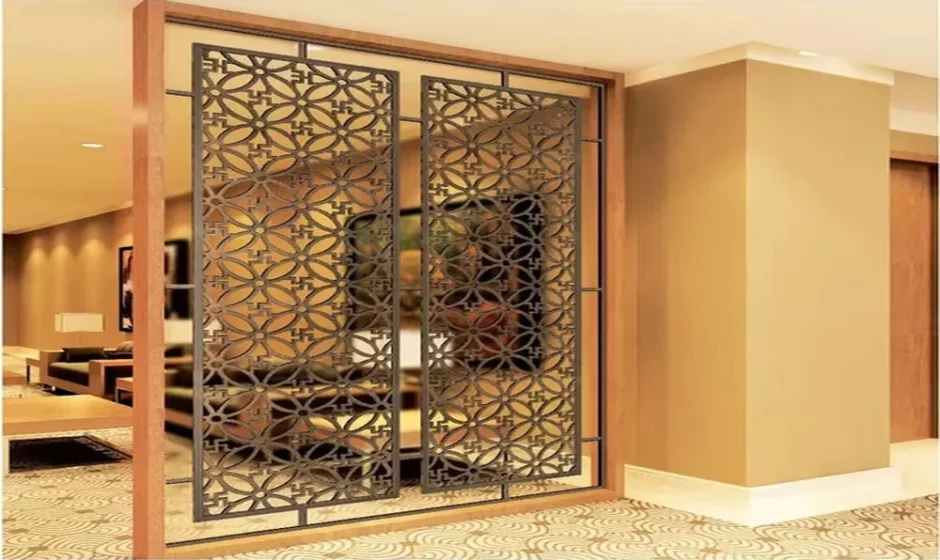
With acrylic jali cutting, you can create detailed patterns for room dividers, entrance screens, wardrobe panels, wall features, and ceiling installations. The versatility of the material also allows designers to explore solid, matte, and gloss looks depending on the desired aesthetics.
Creating Subtle, Intricate Patterns with Laser Cutting
Laser cutting is especially useful when a design has fine lines, repeated motifs, or intricate openings. A digital drawing can be translated into an exact pattern for cutting, which helps to keep many panels looking the same.
That’s why a properly designed laser-cut acrylic can be used to create screens that appear detailed, but do not become visually heavy. The technique is suitable for decorative partitions and feature panels where accuracy and clean pattern reproduction are important. Acrylic is also relatively lightweight, making it easier to handle and install than some traditional materials.
Using CNC Routing for Larger & Customized Designs
If the design calls for routed grooves, shaped edges, larger openings, or specific three-dimensional details, then CNC routing of acrylic sheets is an alternative approach. Patterns can be consistently reproduced from a prepared digital design using computer-controlled routing.
This is why CNC routing is helpful for custom acrylic screen patterns for your project, instead of a standard decorative motif. Designing to the size of a specific partition, reception area, retail display, or residential feature can help the finished panel better fit the space it is intended for.
Combining Function with Finesse
Decorative screens are more than skin deep. They can separate out spaces while maintaining a sense of openness. In houses, they separate dining areas, passageways, or living spaces. They can help define zones in offices and commercial settings without creating a completely opaque barrier.
Acrylic is also good for applications where durability and easy maintenance are important. Royale Touche acrylic range says their solid acrylic sheets are resistant to scratches, cracks,s and impact. They also say they are moisture-resistant and UV-fade-resistant. Such features can support the use of tailor-made acrylic screen patterns for a range of interior applications.
Choosing the Right Acrylic for Your Design
There is more to the success of a decorative screen than the cutting technique alone. Before fabrication, designers should evaluate acrylic type, thickness, colour, finish, pattern density, and installation method. A structured acrylic sheet selection guide can help match the material to the application before laser cutting or CNC routing begins, particularly when the design includes fine openings, routed grooves, or large customised panels.
It is also important to choose the method of fabrication depending on the purpose. Acrylic jali cutting can emphasize decorative perforations, while routing can add shaped details and grooves. When designing projects that involve laser-cut acrylic, the artwork should be prepared carefully so that fine elements stay structurally practical after cutting.
Conclusion
Acrylic sheets offer designers a great deal of scope to develop modern screens, partitions, and jali-inspired features. Laser cutting offers precision for intricate motifs, and CNC routing on acrylic sheets can create shaped and customized details.
Custom acrylic screen patterns are painstakingly developed to enable designers to create decorative elements that balance privacy, openness, and visual interest. If the project involves acrylic jali cutting or a refined laser-cut acrylic design, the combination of digital fabrication and suitable acrylic finishes allows for traditional pattern ideas to be interpreted in a contemporary way.